






















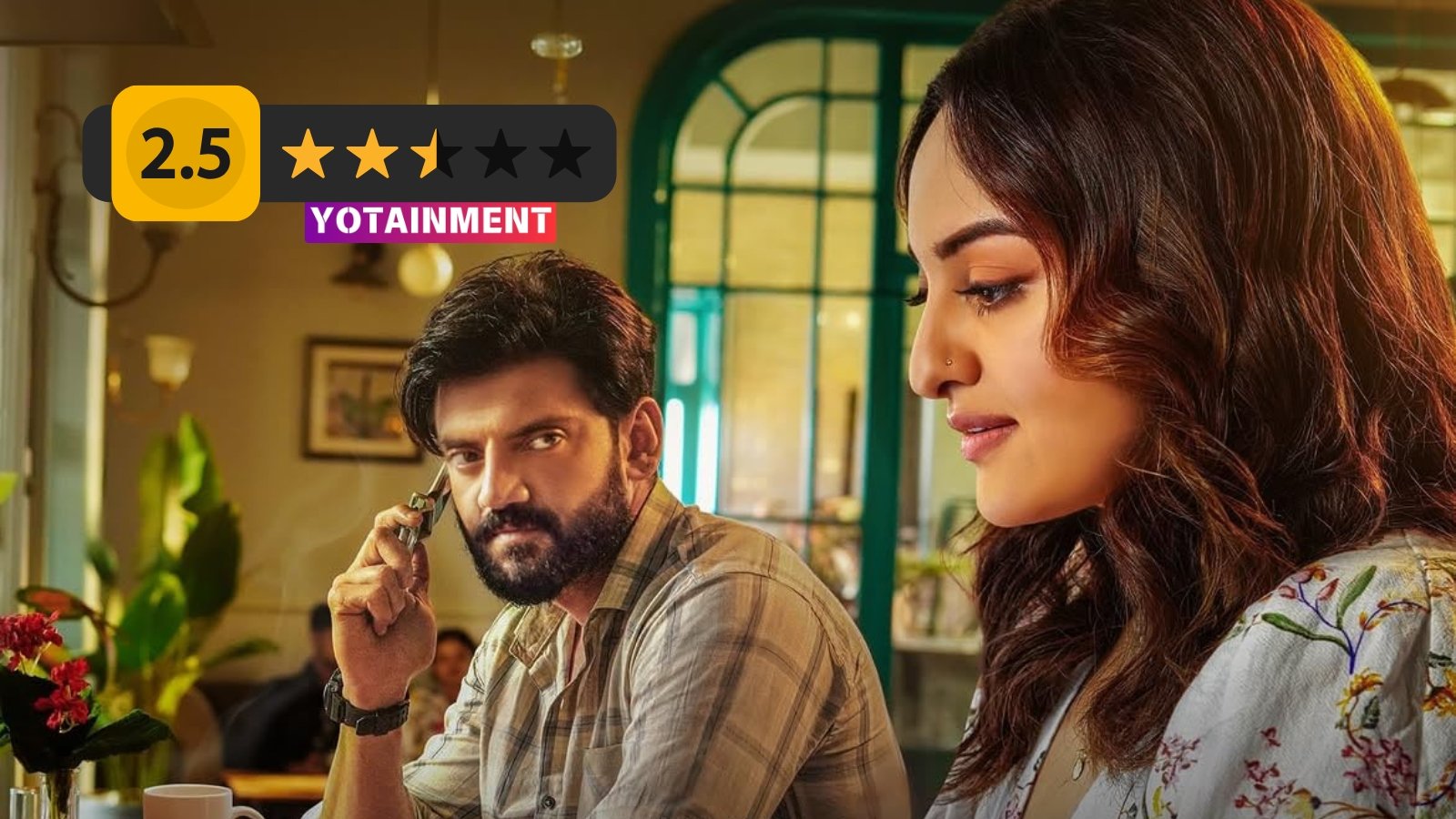
What happens when a mysterious phone connects two people living ten years apart, and one of them sees it as a chance to get the woman he wants? Tu Hai Meri Kiran takes this unusual idea and builds a psychological romantic thriller around obsession, manipulation and the possibility of changing the future. The setup has plenty of scope for suspense, but the film struggles to turn its intriguing concept into a consistently satisfying experience.
Directed by Karan Rawal, the film stars Sonakshi Sinha and Zaheer Iqbal in conflicting roles, with their real-life relationship adding another layer of curiosity to the casting. The first half has enough surprises to keep viewers invested, and Zaheer delivers a performance that stands out. However, the narrative loses its grip in the second half, leaving the film short of its potential.
Tu Hai Meri Kiran Review: An Unusual Premise With Plenty of Twists
The story follows Kiran Mittal (Sonakshi Sinha), a successful author living in 2026, who finds herself connected through a mysterious old phone to Samar (Zaheer Iqbal), a man living in 2016. Kiran is dealing with personal troubles, including doubts about her marriage to Riyaan (Ankit Gupta), when this unusual connection brings Samar into her life.
What begins as an unexpected communication soon takes a disturbing turn. Samar develops feelings for Kiran, but his attachment becomes increasingly obsessive. The phone gives him an unusual advantage, allowing him to influence events in ways that could change Kiran’s future. Instead of accepting her choices, he sees the connection as a means to get what he wants.
The concept gives the film an interesting mix of suspense, romance and psychological drama. It also raises questions about destiny, free will and the fine line between affection and control. The idea is strong enough to hold attention, but the screenplay needs more precision to make every twist count.
First Half: The Mystery Keeps Viewers Hooked
The first half is where Tu Hai Meri Kiran makes its strongest impression. The film moves beyond the expected stalker-and-victim setup early on, introducing an unexpected angle that changes the direction of the story. The mysterious phone connection adds another layer to Samar’s obsession, giving the narrative a sense of unpredictability.
Karan Rawal builds curiosity around the communication between the two timelines and the impact it could have on Kiran’s life. The developments are unusual enough to keep viewers guessing, while the growing tension between the characters gives the drama its emotional pull.
The film also benefits from the confrontations between Sonakshi and Zaheer. Their scenes have intensity, and the fact that they are a real-life couple adds interest to the dynamic without taking away from the conflict on screen.
The first half gets the audience asking questions, and that is exactly what a mystery thriller should do. At this stage, the film appears to be heading towards a tense second half with the potential for a satisfying payoff.
Second Half: Too Many Twists, Not Enough Clarity
Unfortunately, the film begins to lose its way once the story moves into the second half. The screenplay becomes increasingly complicated, with developments that are difficult to digest and character decisions that do not always feel convincing. The mystery remains, but the storytelling starts creating confusion rather than suspense.
The biggest problem is the lack of clear explanations surrounding the phone’s unusual abilities. The film asks viewers to accept a concept that could have been fascinating, yet never establishes its rules convincingly enough. How the connection works and how events in 2016 affect Kiran’s life in 2026 are central to the story, but the answers remain frustratingly incomplete.
The climax also falls short of the expectations created by the first half. Several twists feel underdeveloped, while the emotional consequences of the characters’ actions could have been explored more deeply. The film wants to surprise viewers, but unpredictability alone cannot replace sound storytelling.
A good thriller keeps viewers guessing. A frustrating one leaves them wondering whether the story itself knows the answers. Tu Hai Meri Kiran occasionally crosses that line, weakening the impact of an otherwise interesting premise.
Sonakshi Sinha and Zaheer Iqbal Lead the Drama
Zaheer Iqbal emerges as one of the film’s biggest strengths. He brings a noticeable change of intensity to Samar, portraying both his seemingly harmless side and the disturbing desperation beneath it. His performance gives the character more dimension than the writing sometimes allows, making him a compelling presence in the film.
Sonakshi Sinha is convincingly cast as Kiran. She looks comfortable in the role and handles the dramatic confrontations well, particularly when the story places her character under pressure. However, Kiran’s emotional journey needed more depth, and the screenplay could have given her greater agency in dealing with the situation.
Ankit Gupta is fair as Riyaan, but his character lacks sufficient development to make the relationship with Kiran feel emotionally layered. Purnendu Bhattacharya performs well as Kiran’s father, Mahesh Mittal, although the reason behind their strained relationship feels superficial. Zarina Wahab, as Samar’s mother Seema, and Sherlin Seth, as Sakshi, provide able support.
The lead pair brings enough intensity to several key scenes, but the supporting characters and their individual tracks needed stronger writing to leave a deeper impression.
Direction, Music, Action and Technical Aspects
Karan Rawal deserves credit for attempting a story that combines a psychological thriller with an unusual time-related mystery. The opening stretch demonstrates an understanding of how to build curiosity, and the film has moments when its dramatic potential comes through clearly.
However, the direction cannot fully overcome the screenplay’s weaknesses. The second half needed tighter writing, clearer explanations and a more convincing build-up to its revelations. The dialogues are also fairly ordinary, doing little to elevate the confrontations.
On the music front, the film has a limited musical presence. OAFF and Savera contribute to the soundtrack, while Humsafar, sung by Vishal Mishra, offers a soothing melodic touch. The song Na Roko may remind some listeners of Doobey from Gehraiyaan. Advait Nemlekar and Shalom Benjamin’s background score does a better job of supporting the tension and dramatic moments.
Utkarsh Marulkar’s cinematography suits the film’s setting, while Sunil Nigvekar’s production design adds a polished touch. Neelangi Johari’s costumes are stylish, and Vikram Dahiya’s action is realistic where required. Atanu Mukherjee’s editing is particularly effective in the transitions between the two timelines, although the overall narrative could have benefited from greater clarity.
The technical work supports the film’s atmosphere, but it cannot fill the gaps left by the screenplay.
What Works and What Doesn’t
Tu Hai Meri Kiran has a few clear strengths. Its unusual premise gives the story a fresh starting point, the first half builds genuine curiosity, and Zaheer Iqbal delivers a performance that adds intensity to the proceedings. Sonakshi Sinha also holds her own, while the background score helps sustain the mood.
The weaknesses, however, are difficult to overlook. The second half becomes unnecessarily complicated, the mysterious phone’s abilities are never explained satisfactorily, and several character decisions lack conviction. The strained father-daughter relationship is underdeveloped, while the climax fails to deliver the payoff the setup promises.
The film also arrives amid a crowded theatrical period, with limited buzz working against its prospects. Its unusual concept could attract curious viewers, but the uneven execution may make strong word of mouth difficult.
Tu Hai Meri Kiran Review: Final Verdict
Tu Hai Meri Kiran starts with an idea that could have made for a gripping psychological thriller. The first half builds intrigue, the lead pair delivers some engaging confrontations, and Zaheer Iqbal brings a welcome spark to the film. There is enough here to suggest that Karan Rawal had an interesting story to tell.
Also read: Udta Teer Review
But the second half loses focus, leaving important questions unanswered and several twists without the impact they need. The film confuses complexity with depth, and its promising setup never develops into the gripping experience it could have been.
The Review
Tu Hai Meri Kiran
Tu Hai Meri Kiran offers an intriguing premise and a surprising performance from Zaheer Iqbal, but a confusing second half and weak writing hold it back. A thriller with potential that delivers only in parts.
PROS
- Zaheer Iqbal delivers a surprising performance as an obsessive lover.
- An intriguing premise with a mysterious phone connecting two timelines.
- The first half builds suspense and keeps viewers hooked.
CONS
- The second half gets confusing and leaves several questions unanswered.
- Weak dialogues and underdeveloped character arcs.
- Sonakshi Sinha's character lacks emotional depth and agency.