






















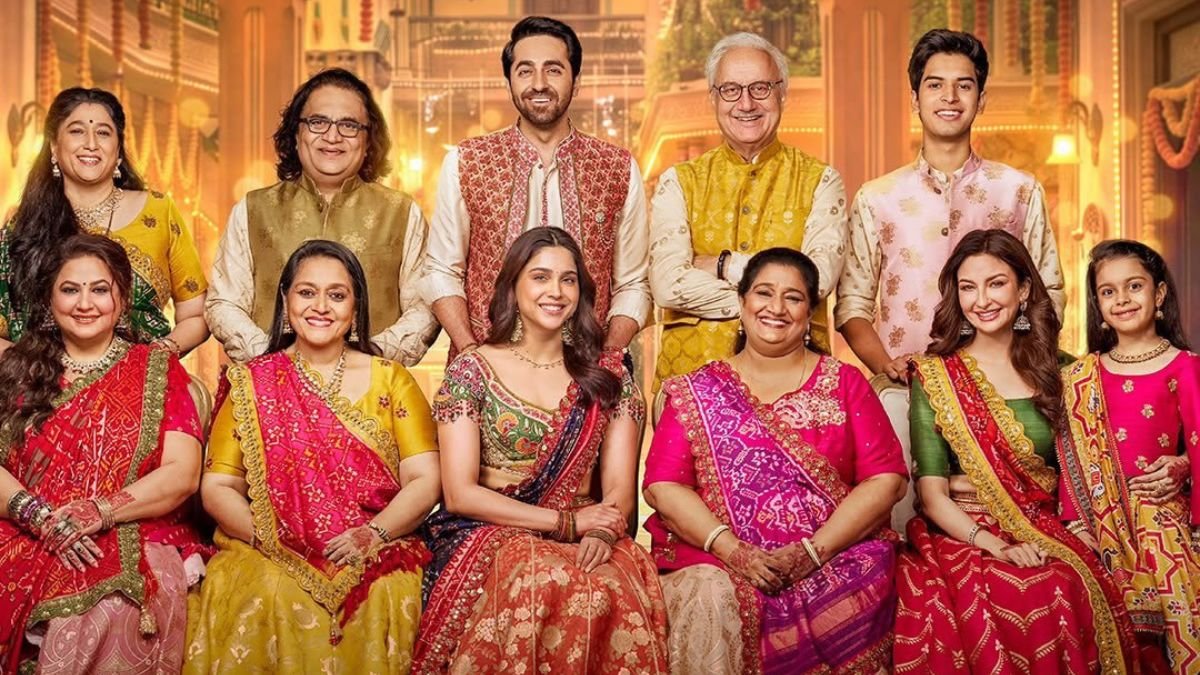
Sooraj Barjatya returns to the big screen with the kind of family entertainer that feels familiar, yet tries to say something different. Yeh Prem Mol Liya brings back the warmth, relationships, music and family conflicts associated with the Rajshri brand, but this time, it challenges some deeply rooted ideas about marriage, gender roles and responsibility.
The film has its heart in the right place. It makes a refreshing argument for equality in marriage, and its central idea gives the story an interesting direction. While the writing isn’t always as sharp as it needs to be, the film has enough warmth, sincere performances and emotional moments to find an audience, particularly among family viewers.
Yeh Prem Mol Liya is a feel-good family drama with a progressive outlook, though it doesn’t quite hit the emotional highs it aims for.
The story revolves around Prem Mishra (Ayushmann Khurrana), a musician aspiring to become a music director, who falls in love with Purva Solanki (Sharvari Wagh), a journalist deeply committed to her family. Purva is the sole support system for the women in her ancestral home, and marriage isn’t something that can simply make her walk away from those responsibilities.
Instead of asking Purva to leave her home and adjust to his family, Prem proposes an unconventional arrangement. He and his family move into the Solanki household, turning the traditional idea of marriage on its head. What follows is a clash of personalities, family values, generational attitudes and expectations, with the film making a case for companionship over customs.
The concept is genuinely refreshing. Sooraj Barjatya takes a familiar family-drama setup and attempts to look at it through a contemporary lens. The film also touches upon widow remarriage, second chances and how the values men inherit from their families influence their treatment of women.
The problem is that the screenplay doesn’t always allow these themes to unfold naturally. The film frequently spells out its message instead of letting the characters and their circumstances speak for themselves. Some conversations feel unnecessarily preachy, and the narrative occasionally turns into a series of situations designed to underline its social message. The intention is commendable, but a little subtlety could have made the impact stronger.
First Half: A Familiar Rajshri Setup With a Fresh Idea
The first half takes its time establishing Prem and Purva’s relationship, their respective family situations and the unconventional marriage arrangement that drives the story. The romance, however, feels somewhat rushed, with the leads moving towards marriage before their relationship gets enough breathing room.
The family interactions, humour and emotional moments bring some charm to the proceedings, but certain portions feel stretched. The film takes a while to settle into its groove, and the screenplay could have been tighter, especially considering its nearly three-hour runtime.
The interval point sets up the domestic conflicts that are expected to follow, with two very different families forced to navigate life under one roof. The idea has plenty of potential, but the first half doesn’t fully capitalise on it.
Second Half: More Emotion, More Conflict, But Uneven Writing
The second half is where the family dynamics and ideological clashes get more attention. Courtroom sequences, emotional confrontations and the evolving relationships between the characters add some weight to the narrative.
There are moments that genuinely work, particularly when the film explores the importance of respect, responsibility and standing by your partner. However, several characters remain underdeveloped. Swanand Kirkire’s character, for instance, is constantly angry, but the film never digs deep enough into the reasons behind his behaviour or his strained relationship with his father.
The women in Purva’s family also deserved more individual attention. Their experiences could have added greater depth to the film’s central argument about patriarchy and family expectations. Instead, some of their conflicts and resolutions feel too conveniently handled.
The film loses a bit of its emotional momentum after Anupam Kher’s character exits the story. His presence brings an ease and warmth that the narrative struggles to maintain consistently thereafter.
Performances: Ayushmann, Sharvari and Anupam Kher Bring Warmth
Ayushmann Khurrana is sincere as Prem. He brings a gentle, likable quality to the character and makes the unconventional decisions feel believable. His performance isn’t about grand gestures, but about portraying a man who is comfortable questioning traditions. He remains one of the film’s strongest assets.
Sharvari Wagh makes a good impression as Purva. She brings conviction to a woman who refuses to abandon her responsibilities, while also allowing the character’s vulnerabilities to surface. Her chemistry with Ayushmann adds freshness to the romantic track.
Anupam Kher is a welcome presence. He lends the film warmth, humour and emotional grounding, making his character one of the more memorable parts of the narrative.
Swanand Kirkire attempts to portray a difficult son and an uncompromising father-in-law, but the writing doesn’t give him enough layers to make the character compelling. Seema Pahwa, Supriya Pathak Kapur, Saumya Tandon, Shruti Seth and the rest of the ensemble contribute to the family atmosphere, although a few characters could have been written with greater depth.
Direction, Music and Technical Aspects
Sooraj Barjatya stays firmly in familiar territory with colourful family settings, emotional conversations, celebrations and relationship-driven storytelling. His direction is assured, and he clearly knows the kind of film he wants to make. The challenge lies in balancing his traditional storytelling style with the film’s progressive themes, and that balance isn’t always achieved.
Himesh Reshammiya’s music complements the film’s mood and setting. The songs are pleasant and fit the narrative, but they lack the kind of lasting recall that one associates with memorable Rajshri musicals. They add to the experience without becoming a major highlight.
The film’s humour, emotional moments and family interactions work in patches. The overall cinematic presentation is rooted in the classic family-entertainer format rather than spectacle, and that isn’t necessarily a drawback. The bigger concern is the screenplay, which could have been more engaging, nuanced and considerably shorter.
What Works and What Doesn’t
What Works:
- A refreshing and progressive central idea about marriage and family responsibilities.
- Sincere performances by Ayushmann Khurrana and Sharvari Wagh.
- Anupam Kher adds warmth and emotional weight.
- Family interactions and emotional moments work in parts.
What Doesn’t:
- Preachy writing that repeatedly spells out its message.
- A rushed romantic track and stretched first half.
- Several supporting characters lack depth and proper development.
- Nearly three-hour runtime and songs with limited recall value.
Yeh Prem Mol Liya Review: Final Verdict
Yeh Prem Mol Liya is a well-intentioned family entertainer that makes a relevant argument for equality, mutual respect and shared responsibilities in marriage. Sooraj Barjatya brings his trademark warmth, while Ayushmann Khurrana, Sharvari and Anupam Kher help the film stay engaging despite its writing issues.
The film has its share of slow stretches, predictable developments and overly direct messaging, but it isn’t without charm. Family audiences who enjoy old-school romance, emotional drama and Rajshri-style storytelling may find enough to connect with.
Also read: Gunmaaster G9 Review
Yeh Prem Mol Liya has a good heart and a refreshing message, but a tighter screenplay could have turned this warm family drama into a much more memorable theatrical experience.
The Review
Yeh Prem Mol Liya
Yeh Prem Mol Liya blends Sooraj Barjatya's signature family-drama warmth with a progressive take on relationships. Sincere performances and a meaningful message make it an enjoyable watch, despite uneven writing and slow stretches.
PROS
- Refreshing and progressive take on marriage and family responsibilities.
- Sincere performances by Ayushmann Khurrana and Sharvari Wagh.
- Sooraj Barjatya's signature warmth and engaging family moments.
CONS
- Preachy writing that makes the social message too obvious.
- Slow-paced first half and a rushed romantic track.
- Underdeveloped supporting characters and a lengthy runtime.