






















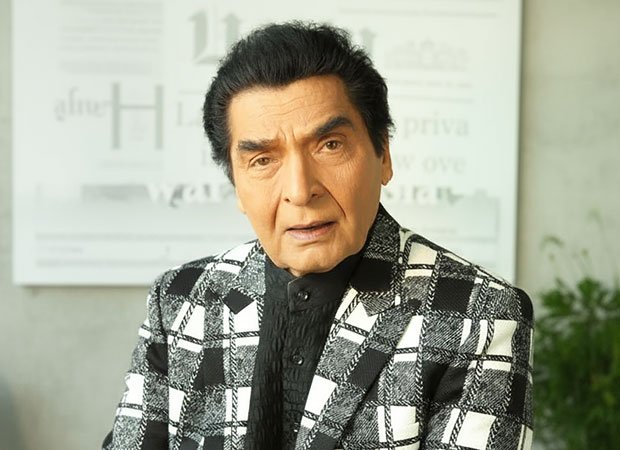
The world of Indian cinema has lost one of its brightest sparks. Asrani Sahab, the man whose voice, expressions, and impeccable timing could make even the gravest of rooms erupt with laughter, has left us. Yet, as we mourn, it feels more fitting to celebrate the joy he gave generations — from the 1960s to the 2020s, from children to grandparents, everyone has laughed because of him.
I first encountered Asrani Ji in Priyadarshan’s films. Who could forget the blustering thekedaar in Khatta Meetha, the underworld “Mamu” in De Dana Dan? or Pappa Ji from Dhamaal, Each character was an unforgettable echo of Asrani’s genius. He had a rare gift: the ability to make comedy feel both effortless and eternal.
It’s impossible to talk about Asrani Ji without mentioning Sholay (1975). His short but unforgettable role as the jailer — “Hum angrezon ke zamane ke jailer hain” — remains one of Hindi cinema’s most iconic comedic moments. The genius lay not just in the dialogue but in the physical comedy, the nasal delivery, and the precise body language he brought to life, a subtle nod to Adolf Hitler’s authoritative style, but twisted hilariously. Even his audition for this role was a test in itself, where every gesture, tone, and expression was scrutinized by Salim-Javed and Ramesh Sippy.
Before he became the jailer of Sholay, Asrani Ji was already carving a niche. His breakthrough as a lead comic came in Aaj Ki Taaza Khabar (1973), where his chaotic and spirited portrayal of Champak Bhumia earned him the Filmfare Award for Best Comedian. On this very set, he met Manju Bansal, his co-star, and the two fell in love, marrying the same year — a real-life romance to match his reel-life charm.
Born into a Sindhi family in Jaipur, Asrani Ji was expected to join the family carpet business. But numbers and business weren’t for him; comedy and acting were. He began as a voice artist at All India Radio to fund his education and later honed his craft at FTII, Pune, where Hrishikesh Mukherjee spotted his talent. From Guddi (1971) to collaborations with Rajesh Khanna in 25 films, and over 19 films with Priyadarshan in later years, his journey spanned five decades, more than 350 films, and countless hearts.
He wasn’t just a supporting comic; he could lead, direct, and star. From Chala Murari Hero Banne (1977) to his Gujarati films, Asrani explored every dimension of cinema. Even in his final days on Bhoot Bangla and Haiwaan, despite health challenges, he prepared meticulously, memorizing entire pages in one go — a testament to his dedication.
Off-screen, Asrani Ji’s warmth was as legendary as his roles. Actors would gather for his tales of yesteryears, soaking in his stories as eagerly as we soaked in his laughter on-screen. He taught us that comedy isn’t just about jokes; it’s about timing, nuance, and heart.
As we bid farewell to Asrani Sahab, let us remember the joy he gifted, the laughter he sparked, and the characters that will live on forever. He may have left the stage of life, but his humor, warmth, and unmatched artistry will echo through generations. May he rest in peace — sharing jokes with the legends in the heavens above.