






















Not every courtroom drama needs loud confrontations or over-the-top twists to keep you hooked. Sometimes, the facts themselves are more disturbing than fiction. Prahaar taps into that unsettling reality, revisiting the legal battle that followed the 26/11 Mumbai terror attacks and the prosecution’s fight to bring Ajmal Kasab to justice. The result is an intense, emotionally charged film that combines courtroom tension with performances that leave a mark.
Directed by Avinash Arun, the film puts Ujjwal Nikam’s role in the case at the centre of its narrative. While the events of 26/11 have been covered extensively over the years, Prahaar shifts the focus to what happened after the attacks, particularly the arguments, evidence and legal manoeuvres that unfolded inside the courtroom. This is where the film finds its strongest footing.
Prahaar Review: A Courtroom Battle That Keeps You Invested
The writing is one of the film’s biggest strengths. The courtroom exchanges have bite, the arguments carry weight, and the tension builds without relying on unnecessary melodrama. Avinash Arun understands the seriousness of the subject and keeps the narrative focused on the legal fight rather than turning it into a conventional commercial thriller.
The recreation of the attack at Mumbai’s CST station is particularly disturbing. The brutality of the incident and the suffering of innocent people are presented in a way that brings back the horror of that night. Anger, grief and helplessness come naturally from these sequences, making them difficult but important to watch.
Several courtroom moments stand out. Nikam’s challenge to Kasab’s claim of being a juvenile is among the film’s sharpest sequences. The pre-interval stretch delivers a strong dramatic punch, while a young girl’s testimony after the interval becomes one of the most emotionally affecting moments in the film. The finale also leaves a strong impression.
Running for approximately two hours and 20 minutes, Prahaar manages to hold attention through much of its runtime. The proceedings are detailed without becoming overly complicated, and the tight screenplay gives the film a sense of urgency.
Rajkummar Rao Delivers, Lalit Prabhakar Steals The Spotlight
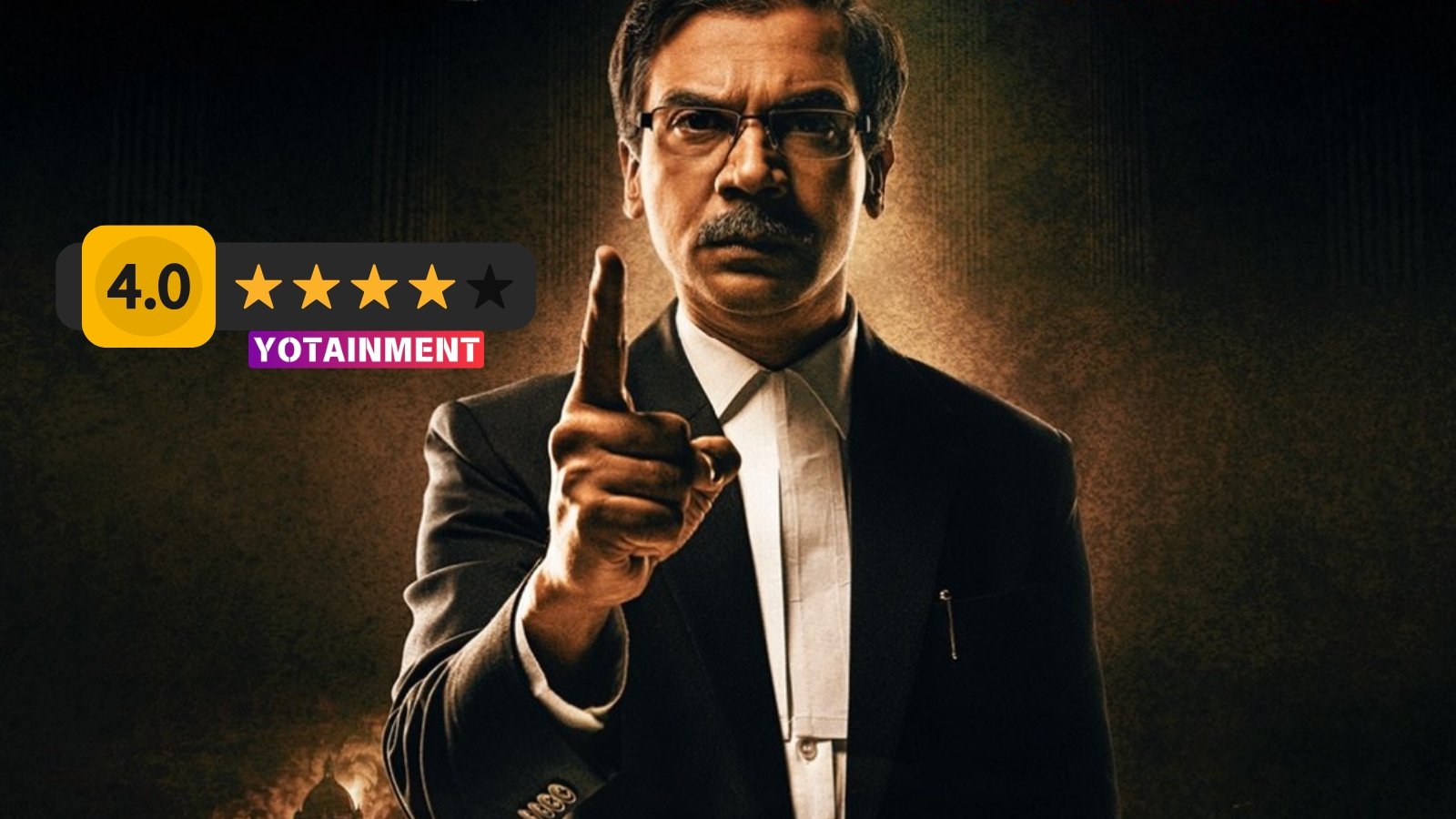
As Ujjwal Nikam, Rajkummar Rao brings conviction and authority to the screen. His performance is controlled, sharp and suitably intense, especially during the courtroom exchanges. He doesn’t need to raise his voice in every scene to establish the character’s determination. His expressions, delivery and command over the proceedings do the job.
However, Lalit Prabhakar deserves special appreciation for his portrayal of Kasab. He makes the character unsettling without resorting to exaggerated mannerisms. The restraint in his performance works particularly well in the jail and courtroom sequences, where even a measured reaction can leave a lasting impact. It is a terrific piece of acting and arguably the film’s biggest surprise.
Jaideep Ahlawat brings his usual authority to the proceedings, while Sikandar Kher makes an impression in both the courtroom and family scenes. Ashish Vidyarthi adds credibility to his role, and Wamiqa Gabbi makes her presence felt despite having limited room in a narrative driven largely by legal arguments.
Ritwik Sahore and Ajinkya Deo also contribute effectively to the ensemble. Child actor Dior Ranju Varghese deserves a special mention for a crucial courtroom sequence after the interval. The performance is deeply moving and gives the film one of its most powerful emotional beats.
Where Prahaar Slows Down
For all its strengths, the film isn’t equally engaging in every stretch. The family dynamics surrounding Nikam add another dimension to his character, but some of these portions feel less compelling than the courtroom proceedings. Viewers who are primarily invested in the legal battle may find the shift in focus a little distracting.
The romantic angle gets limited attention, which isn’t necessarily a drawback given the subject. Still, the personal-life portions could have been handled with greater sharpness to complement the central story.
The music is another area where the film could have done better. Songs would have felt out of place in a story like this, so their absence doesn’t hurt the experience. The background score supports the tension, but it could have added more depth to a few key moments.
These shortcomings don’t derail the film, though. The courtroom drama remains its biggest draw, and the performances keep the narrative engaging even when the pace dips.
Prahaar Review: Final Verdict
Avinash Arun deserves credit for handling a sensitive subject with focus and restraint. Prahaar works because it gives the courtroom battle room to breathe, backs it with solid writing and brings out strong performances from its cast. Rajkummar Rao is convincing as Ujjwal Nikam, but Lalit Prabhakar’s unsettling portrayal of Kasab gives the film an additional edge.
The family portions occasionally slow things down, and the background score could have been more impactful. Yet the film’s strongest sequences more than make up for these limitations. It is gripping, emotionally heavy and thought-provoking without losing sight of the legal battle at its core.
Also read: Jailer 2 Review
Final verdict: Prahaar is a powerful courtroom drama that combines sharp writing, compelling performances and haunting moments. It isn’t perfect, but it makes its point with conviction and leaves you thinking about the case long after the credits roll.
The Review
Prahaar
Prahaar is a gripping courtroom drama backed by sharp writing, Avinash Arun’s assured direction and powerful performances. Rajkummar Rao impresses, but Lalit Prabhakar’s unsettling portrayal of Kasab steals the show.
PROS
- Sharp writing and gripping courtroom sequences keep the tension alive.
- Rajkummar Rao delivers a convincing performance as Ujjwal Nikam.
- Lalit Prabhakar stands out with his unsettling portrayal of Kasab.
CONS
- Family dynamics occasionally slow down the narrative.
- The romantic angle feels underdeveloped.
- The background score could have added more emotional impact.